
If your pool tile has developed a cloudy white crust along the waterline, you're not imagining it, and you're far from alone. Pool tile turning white is one of the most common issues we see across San Antonio, Boerne, and the surrounding Hill Country. The cause is almost always calcium buildup, a byproduct of the hard, mineral-rich water that comes out of the tap in this part of Texas. The good news: it's fixable, and with the right care, preventable too.
What Causes White Buildup on Pool Tile?
That white, crusty film clinging to your waterline tile is calcium carbonate. It forms when your pool water chemistry drifts out of balance, specifically when calcium hardness, pH, or total alkalinity climb too high. As water evaporates off the surface, especially during a hot South Texas summer, it leaves behind whatever minerals were dissolved in it. Over weeks and months, those mineral deposits build layer upon layer until they harden into the chalky scale you can see and feel.
Because San Antonio and the Hill Country sit on naturally hard water, this isn't a rare occurrence, it's closer to a when than an if. Homes on well water, or with pools that run hotter and evaporate faster, tend to see it form even sooner.
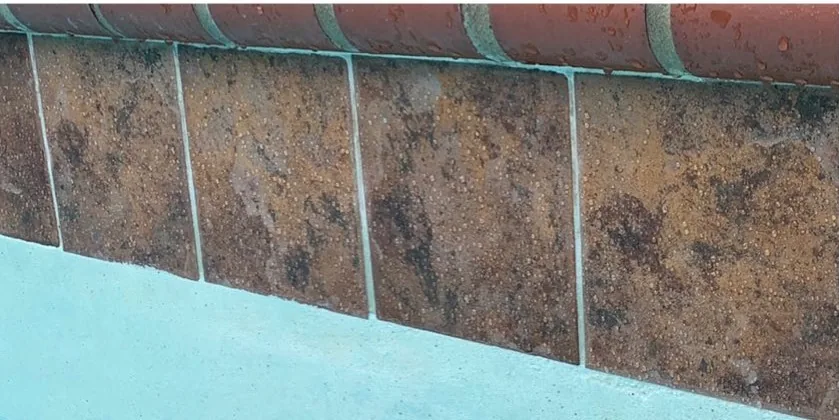
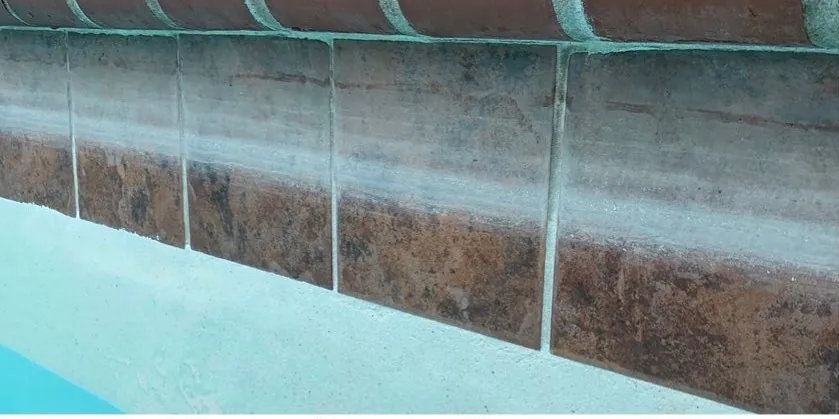
How to Tell If It's Calcium Buildup (and Not Something Else)
Not every stain on pool tile is calcium. Before you decide on a fix, it helps to know what you're actually looking at:
- Calcium carbonate (white, scaly): Chalky and white to gray, rough to the touch, and concentrated right at the waterline. Very light spots may wipe away with vinegar.
- Calcium silicate (gray-white, glassy): Harder and more tightly bonded than carbonate scale. Usually needs professional-grade removal.
- Metal or rust stains (orange, brown, reddish): Typically caused by iron or copper in the water, or corroding equipment, not a hardness issue.
- Organic staining (green, black, brown): Algae or biofilm buildup, usually soft and slippery rather than hard and crusty.
If what you're seeing is chalky, white, and sitting right along the waterline, calcium is almost always the cause.
Why You Shouldn't Scrub It Yourself
It's tempting to grab a wire brush, a pumice stone, or a bottle of tile cleaner and go after it yourself. We get it, but this is exactly how homeowners end up making the problem worse. Wire brushes and abrasive pads can permanently scratch glazed and glass tile, leaving dull patches that catch dirt even faster than before. Acidic cleaners can etch grout, and if used too aggressively, discolor certain tile finishes. And because calcium bonds tightly to the tile surface, most DIY scrubbing only knocks off the top layer, leaving the base of the buildup intact and ready to keep growing.
Once calcium has hardened into scale, it needs a method built specifically to lift it off without damaging what's underneath.
How We Remove It: Professional Bead Blasting
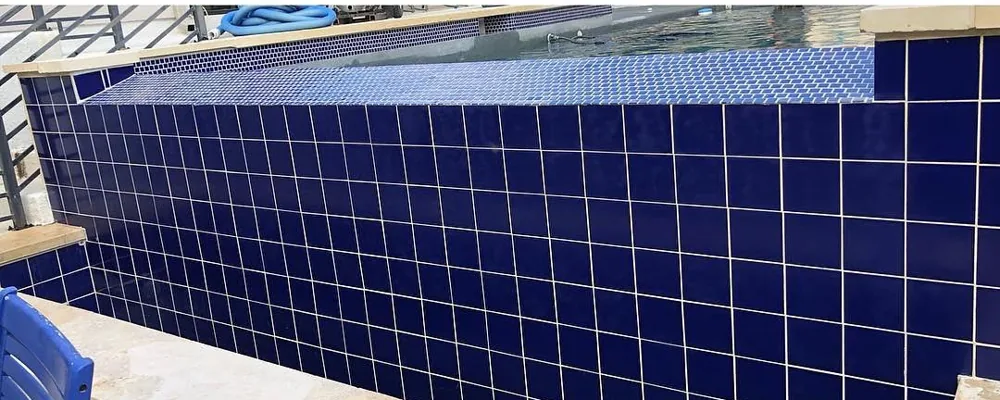
At South Texas Pool Tile Cleaning, we remove calcium buildup with low-pressure glass bead blasting. Rather than scraping or scrubbing, we propel fine glass media at a carefully controlled pressure that breaks apart the calcium layer without wearing down the tile glaze or grout underneath. The pressure and media are adjusted to your specific tile type and how thick the buildup has gotten, so a delicate glass mosaic gets a different touch than a rugged stone-look porcelain.
Most jobs are done in a single visit, with the pool staying full the entire time. There's no draining, no lengthy downtime, and no harsh chemicals left behind.
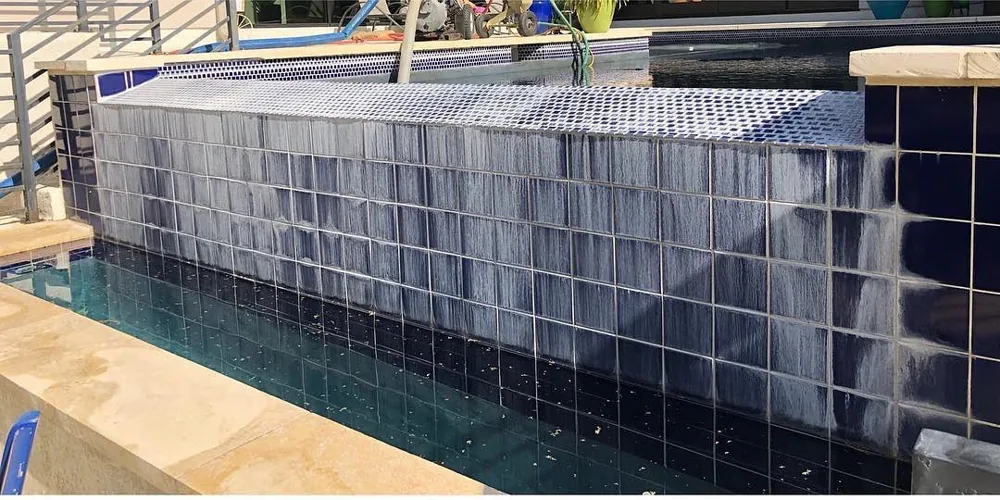
DIY vs. Professional Calcium Removal
DIY methods might buy you a little time, but they rarely deliver a lasting fix:
- DIY scrubbing: Cheap and immediate, but risks scratching tile, rarely removes the full buildup, and the scale typically returns within weeks.
- Store-bought acid washes: Can lighten light buildup, but are hard to dose safely on tile and can damage grout with repeated use.
- Professional bead blasting: Removes buildup down to the tile surface, adjusted to your specific tile and grout, and performed by a technician who knows what a given finish can handle.
For very light, early-stage buildup, a gentle at-home wipe-down might hold you over. Once it's hardened into visible scale, professional removal is the only method that reliably gets it all off without new damage.
How to Prevent Calcium Buildup in the Future
- Test and balance your water weekly. pH and alkalinity swings are usually what push calcium out of solution and onto your tile in the first place.
- Keep calcium hardness in the 200–400 ppm range. Anything higher, and South Texas's already-hard water makes buildup close to inevitable.
- Use a calcium sequestering agent if you're in a hard water area. It helps keep minerals suspended in the water instead of bonding to your tile.
- Brush the waterline weekly. A soft-bristle brush won't remove hardened scale, but it slows fresh buildup from taking hold.
- Schedule professional tile cleaning every 1–2 years to stay ahead of buildup before it hardens into a bigger job.
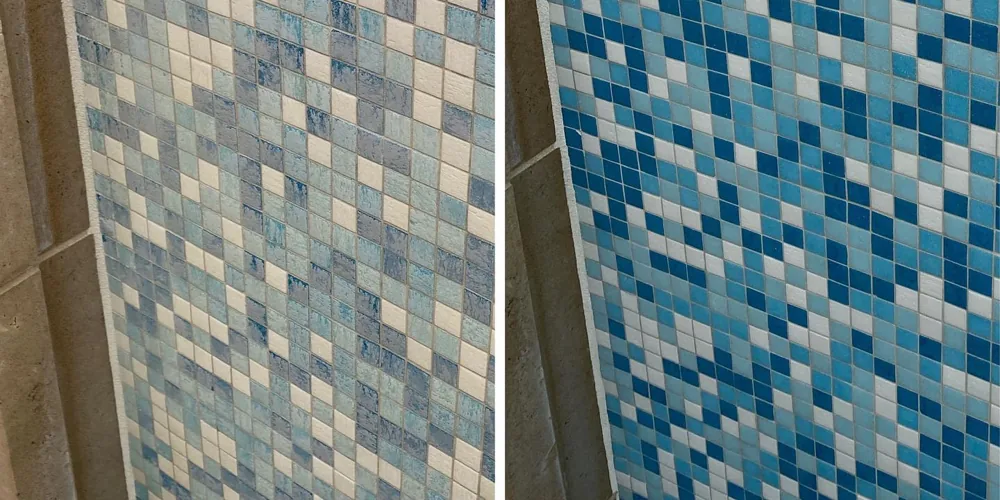
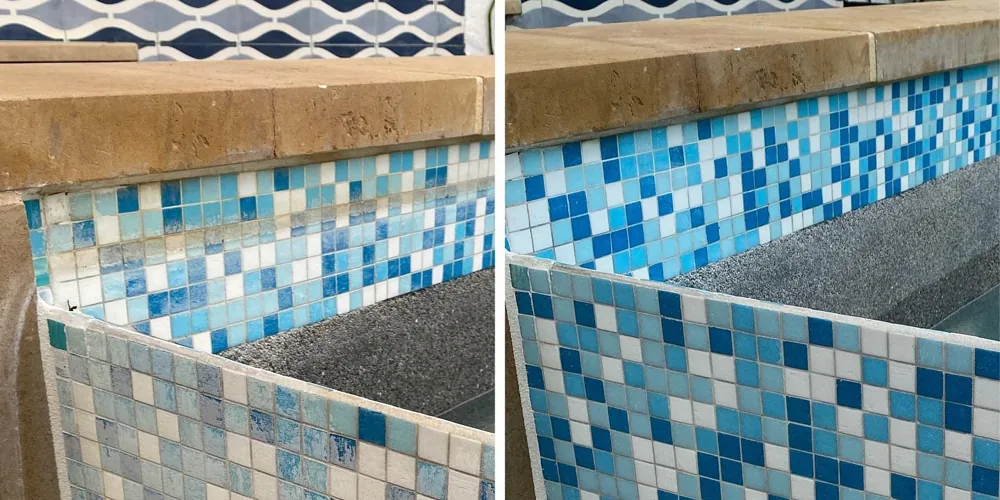
Tired of Fighting White Tile Stains?
Contact South Texas Pool Tile Cleaning today for a free quote and let us bring your tile back to life.
FAQs
They might help with very light spots, but professional blasting is safest and most effective for thick buildup.
Most jobs take just a few hours, and your pool can stay full the whole time.
No. Without a change in water chemistry or professional removal, it only gets thicker and harder over time.
Yes. Glass and glazed ceramic tend to show buildup faster and more visibly than natural stone or textured finishes, though every tile type is susceptible in hard water.
It's not a health hazard, but left untreated it can permanently dull or etch your tile finish and make future removal more difficult.