
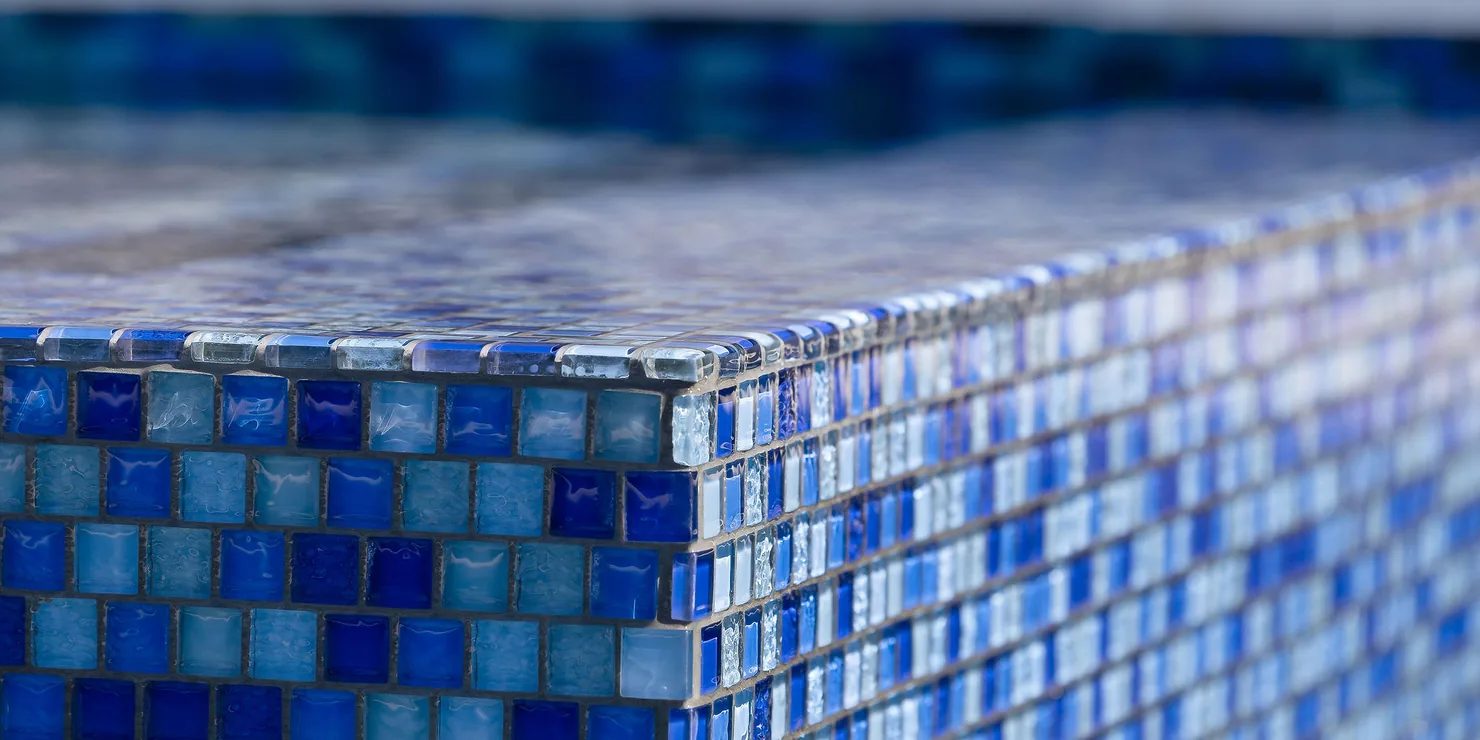
If your pool has a thick white ring around the waterline, you're looking at calcium scale. In South Texas, it's one of the most common maintenance issues homeowners face thanks to our hard, mineral-rich water.
Many homeowners assume the solution is as simple as grabbing a pressure washer. After all, if pressure can clean a driveway, shouldn't it clean pool tile too? Not exactly.
While pressure washing may remove loose dirt and algae, it's not designed to safely remove hardened calcium deposits. In many cases, pressure washing can actually damage your pool tile and grout while still leaving much of the calcium behind.
Professional pool tile cleaning uses an entirely different process called bead blasting, and there's a good reason why.
Why Calcium Scale Is So Difficult to Remove
The white buildup along your pool's waterline isn't ordinary dirt. It's hardened calcium deposits left behind as water evaporates. In San Antonio and throughout Central Texas, our water naturally contains high levels of calcium and other minerals. Every time pool water evaporates, tiny mineral deposits remain on the tile. Over months and years, those deposits harden into a crust that becomes increasingly difficult to remove.
Once calcium reaches this stage, scrubbing and pressure washing usually aren't enough.
What Pressure Washing Actually Does
Pressure washers clean by forcing water against a surface at extremely high pressure. They're excellent for:
- Concrete
- Sidewalks
- Patios
- Exterior walls
Pool tile is different.
Your waterline tile is surrounded by grout, expansion joints, coping, and delicate finishes that aren't designed for thousands of PSI.
High-pressure water can:
- Wear away grout over time
- Chip softer tile finishes
- Force water into small cracks
- Damage aging grout joints
- Leave calcium deposits largely untouched
Many homeowners end up with damaged grout while the calcium ring is still visible.
How Bead Blasting Works
Instead of relying on brute force, bead blasting uses fine, specialized media propelled at controlled pressure to remove calcium deposits from the tile surface. The process breaks apart the mineral buildup while being gentle on the tile itself.
When performed by an experienced technician, bead blasting:
- Removes stubborn calcium buildup
- Preserves the tile finish
- Protects grout lines
- Restores the original appearance of the tile
- Produces consistent results across the entire pool
Rather than trying to blast the deposits off with water pressure, bead blasting carefully removes the calcium layer itself.
Why Professionals Use Bead Blasting Instead of Pressure Washing
There is a reason professional pool tile cleaning companies invest in bead blasting equipment. It's simply the right tool for the job. Pressure washing is designed to remove dirt. Bead blasting is designed to remove hardened mineral deposits.
That difference matters because calcium scale bonds tightly to the tile surface. Trying to overpower it with higher water pressure often increases the risk of damage without improving the results. Professional bead blasting allows technicians to remove years of buildup while preserving the materials that make up your pool.
Is Bead Blasting Safe for Pool Tile?
Yes, when performed correctly.
Professional technicians adjust the blasting pressure and media based on the type of tile, the severity of the calcium buildup, and the condition of the grout.
The goal isn't to aggressively strip the surface. It's to remove the calcium while leaving the tile looking like it should. This is why experience matters just as much as the equipment itself.
When Should You Have Your Pool Tile Professionally Cleaned?
If you notice:
- A thick white ring around the waterline
- Rough or crusty tile
- Brown, gray, or chalky mineral stains
- Calcium deposits that brushing won't remove
- Years of buildup from hard water
it's probably time for professional cleaning. The longer calcium remains on the tile, the thicker and harder it becomes, making removal more difficult over time.
The Better Long-Term Solution
DIY pressure washing may seem like the cheaper option, but it often fails to remove the problem while increasing the risk of damaging your pool's grout and tile.
Professional bead blasting safely removes stubborn calcium deposits, restores your pool's appearance, and helps extend the life of your tile. If your pool has years of hard water buildup, using the right process the first time can save you money on repairs later.
Ready to Restore Your Pool Tile?
At South Texas Pool Tile Cleaning, we specialize in professional bead blasting to safely remove years of calcium buildup without damaging your pool tile or grout. We've helped homeowners throughout San Antonio, Boerne, New Braunfels, and the surrounding Hill Country restore their pools to like-new condition.
If you're tired of looking at stubborn white calcium stains, contact us today for a free estimate and let us show you the difference professional bead blasting can make.